
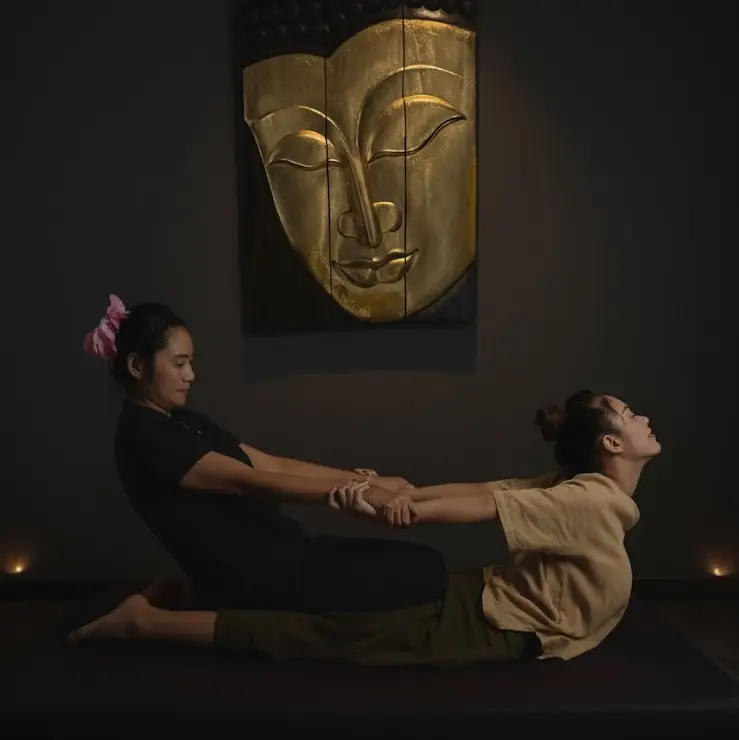
The traditional Thai massage is a tonic, precise, and very different treatment from a classic oil massage. It combines pressure, assisted stretches, and mobilizations to create a sensation of a freer body, while requiring genuine listening during the session.
- The traditional Thai massage is performed fully clothed, without oil.
- The session can be dynamic, with stretches and applied pressures.
- Pressure should always be adjustable: let the therapist know what you prefer during the treatment.
Five key points about traditional Thai massage
What is known as traditional Thai massage is not a recent practice. This therapy dates back over 2,500 years. The history of traditional Thai massage passes through several Asian and Indian influences, with a significant emphasis on breath, energy lines, and movement.
Tradition often attributes its origin to Shivago Komarpaj, a figure associated with ancient medicine in Buddhist tales. In Thailand, this practice developed in temples, then in healing and wellness centers, before becoming one of the most recognized massages worldwide.
What can be expected during the session?
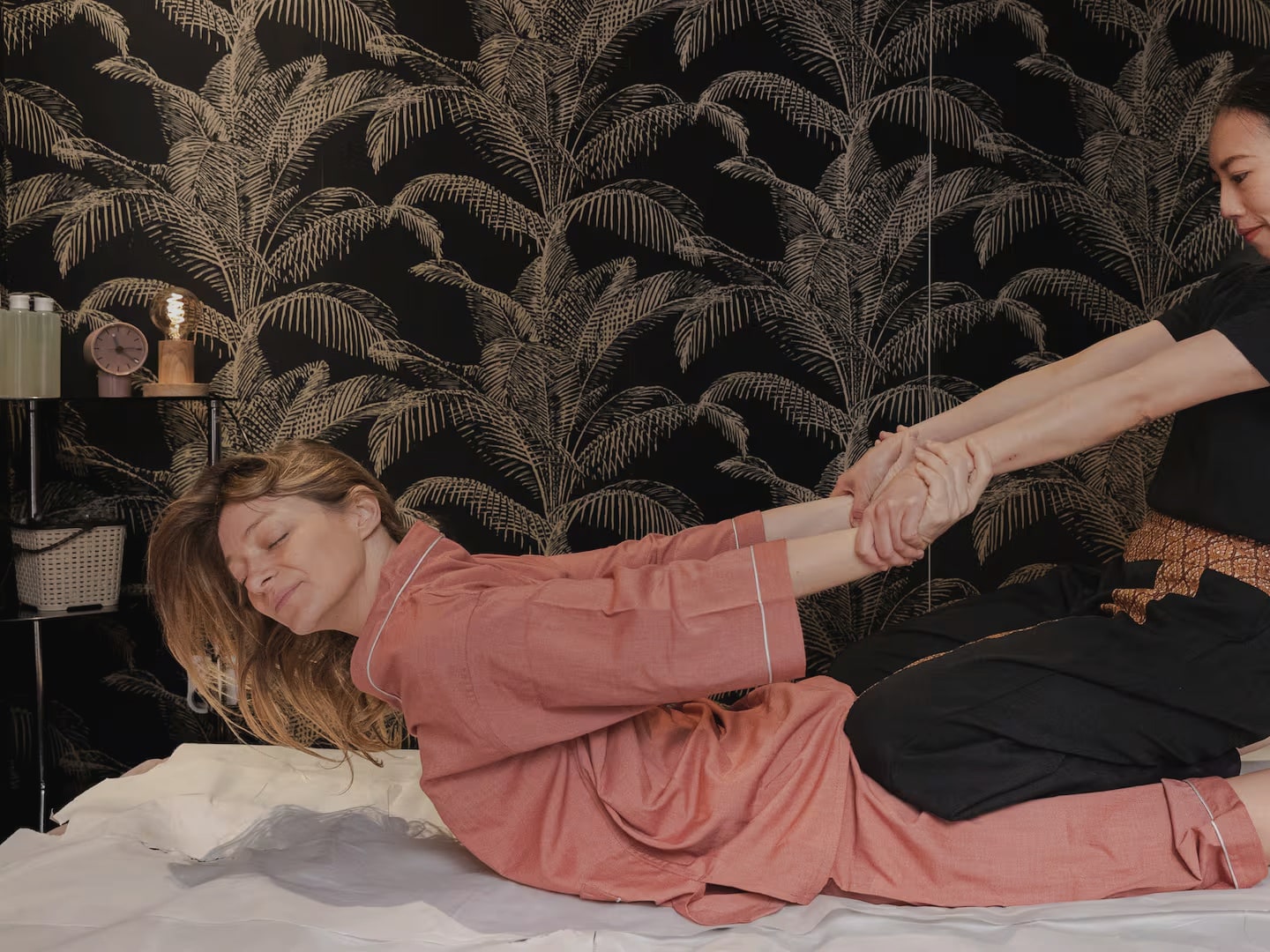
The traditional Thai massage is a more active experience compared to an oil-based relaxing massage. The practitioner may guide you through various positions, using hands, forearms or sometimes body weight to create controlled pressure or stretching.
It can be practiced on a futon on the floor or on a table depending on the care, cabin and habits of the practitioner. It does not use oil or lotion: you remain in comfortable clothing, and the work is done through the clothes.
The session typically alternates between rhythmic pressures, assisted stretches and gentle mobilizations. Certain areas may be more sensitive than others, especially if the body is tired, stiff or not accustomed to this type of massage.
The importance of communication
A good Thai massage depends also on what you express during the session. Some people prefer a strong pressure, while others prefer a gentler approach. Both are legitimate: the key is to communicate at the right moment.
If the pressure is too strong, too light, too fast or too localized, inform your practitioner immediately. They can adjust the intensity, rhythm or worked area. Waiting until the end of the treatment to speak leaves less room for adaptation.
What benefits can be expected?
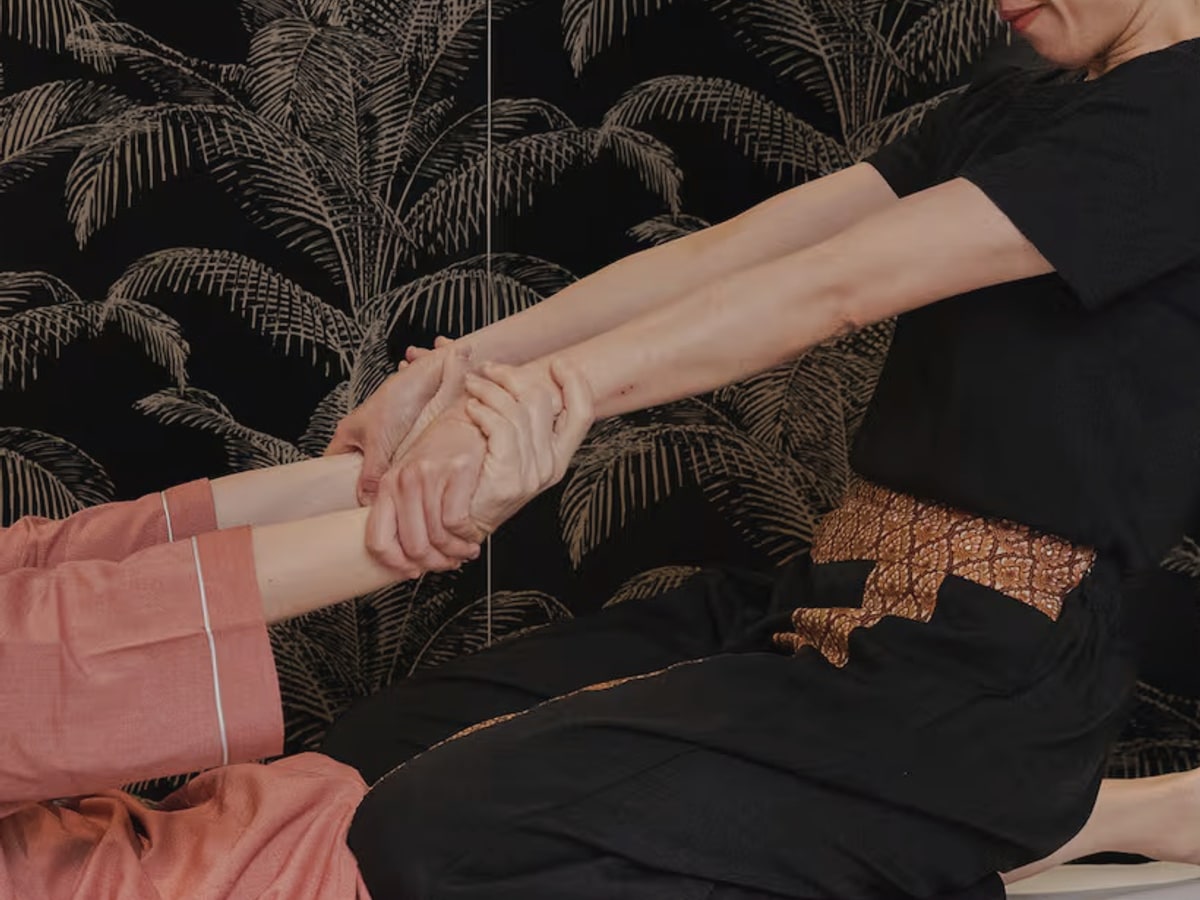
In a calm atmosphere, the traditional Thai massage invites you to return to the body and the present moment. Slow and methodical movements can help to release tensions felt, to regain flexibility and to leave with a feeling of lightness.
This treatment is often appreciated by people who enjoy structured, precise and somewhat tonic massages. It may also be suitable for athletes or individuals who feel the need for a deeper work, provided that the pressure is adapted to each body.
A tonic massage, not for everyone
The traditional Thai massage can be intense. Therefore, it does not suit all situations, especially during pregnancy: in this case, it's better to opt for a prenatal massage, specifically adapted for the comfort of the future mother.
If you have known fragility, unusual pain, recent injury, pathology or specific doubt, seek medical advice before booking. At GONG Paris, massages are wellness treatments: they do not replace a medical or kinesiotherapy follow-up.
After an intense session, it is possible to feel slight aches or temporary sensitivity. Hydrate yourself, rest and express your preferences during your next visit: this dialogue often helps find the practitioner and intensity that suit you best.